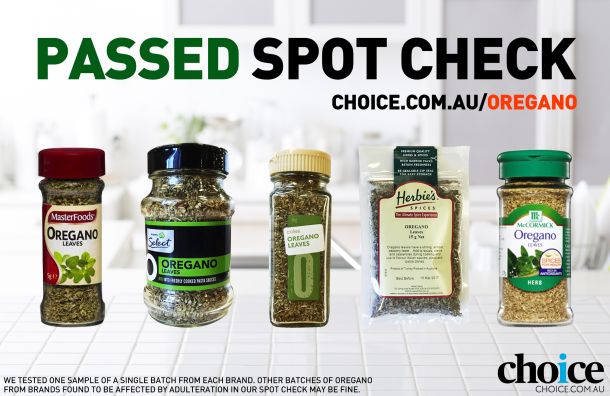
A Choice investigation has revealed that most major Australian brands are selling adulterated oregano.
The consumer advocacy group tested 12 brands and found only five of these were 100 per cent oregano.
Choice said it found oregano sold in Australia was adulterated with olive and sumac leaves - and one product, Master of Spices, contained less than 10 per cent actual oregano, and Hoyt’s contained only 11 per cent.
Aldi’s Stonemill contained only 26 per cent oregano, Spice & Co contained 35 per cent, Menora contained 36 per cent, Spencers contained 40 per cent and G Fresh contained 50 per cent.
Choice's spot check found products from MasterFoods, Woolworths Select, Coles, McCormick and Herbies Spices had 100 per cent oregano leaves.
“Dried oregano is a fixture in most kitchens across the country but many consumers will be surprised to learn they may be getting less than they bargained for with this popular herb,” says Choice head of media, Tom Godfrey.
“There is clearly a major problem in the oregano supply chain in Australia, which also raises the question about other herbs and spices entering the Australian market.”
A food fraud study last year in the UK which found 25 per cent of dried oregano samples were adulterated.
The seven products were adulterated look likely to have breached provisions of the Australian Consumer Law, according to Choice, which has referred its findings to the Australian Competition and Consumer Commission.